Case study
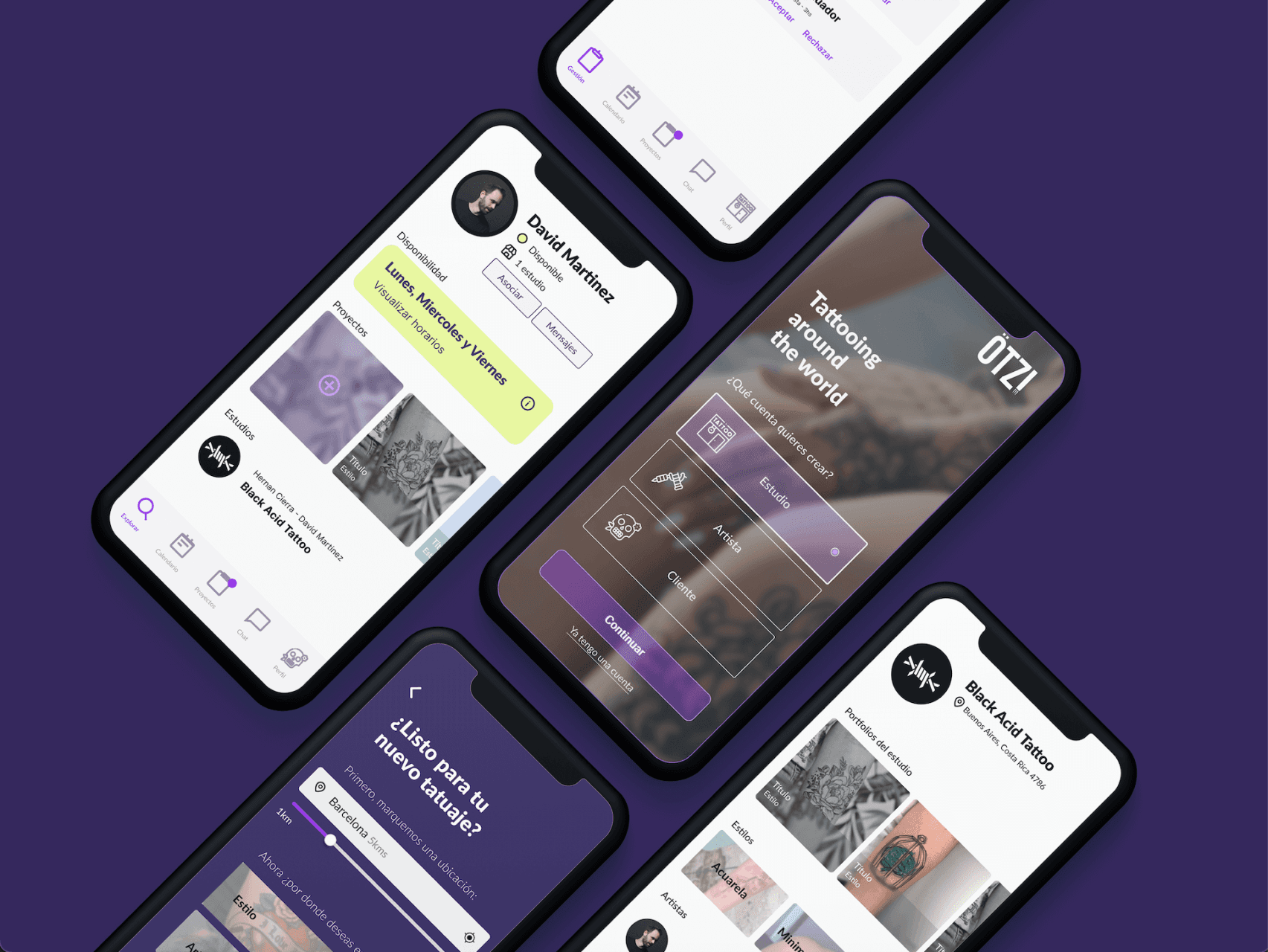

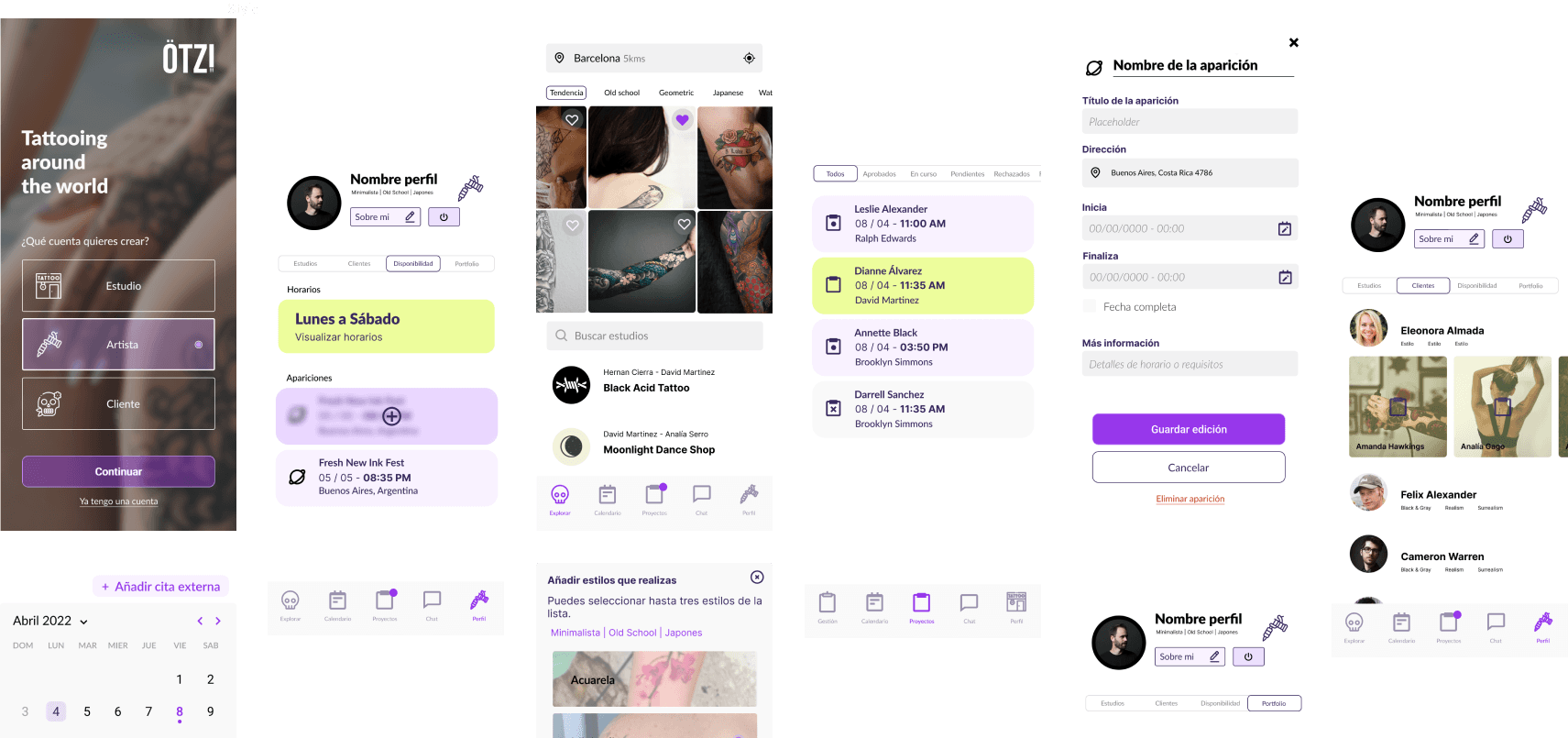
Ötzi is a mobile application for registering and requesting tattoo appointments, contemplating its use in: Tattoo studios (“studio”), tattoo artists who are part of them (“artists”) and customer users of this product (“customers”). .It has Asynchronous operation (with and without internet connection, data recording).
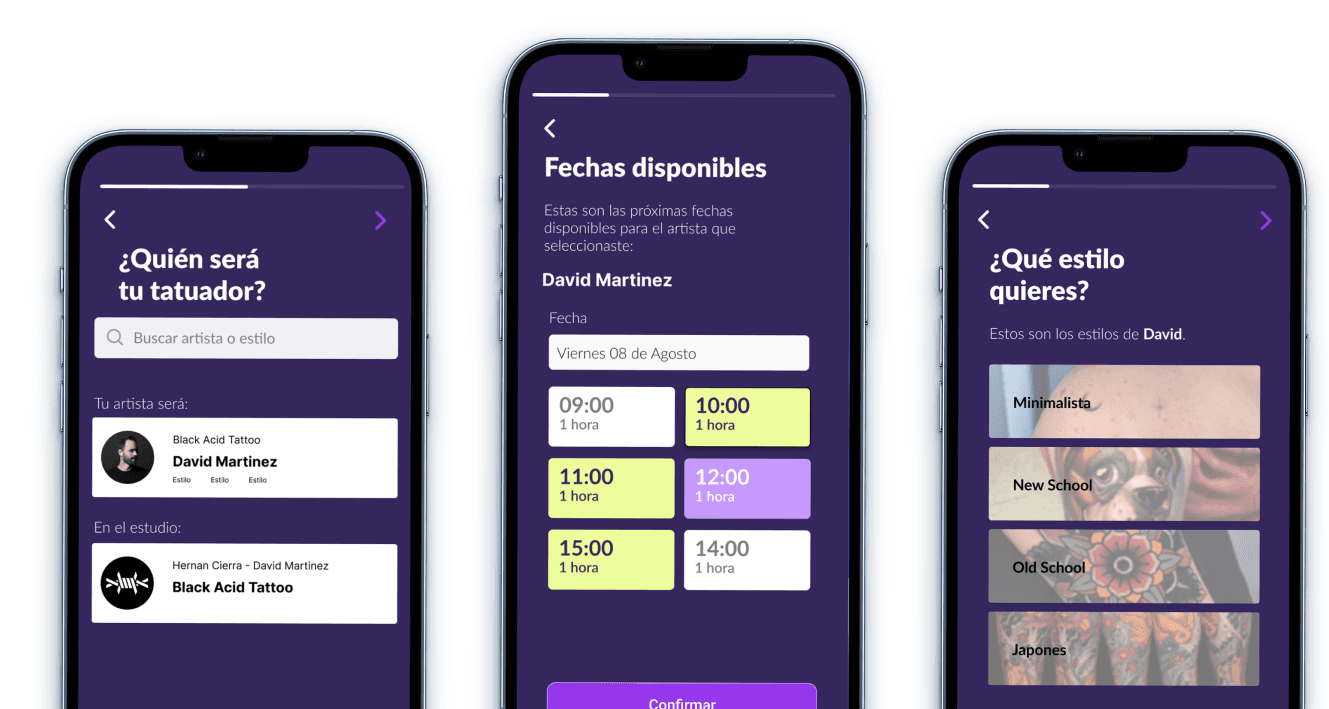
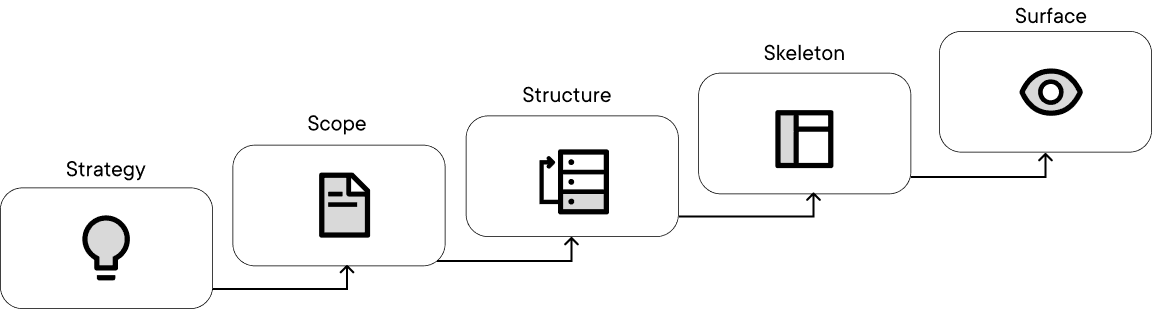
Being a yet unpublished project at the time the project idea came to us, the first step was to know where in the market it belongs to: who’s the user? is there any other tool like this one? If there is, what can we learn from it?
To start solving this questions the first step was performing a benkmark analysis and research about any other product solving the same needs.

With a known base to start with it’s time to select the involved users and profiles: who is our user? do we have different types of users? whats the main difference between them?

STUDIOS
Administration and registration of projects and artists.
Needs a way to organize both artists and clients.
Normally uses a paper planner or an spreadsheet to organize schedule and payment.
It’s hard and tedious to organize and modify schedules in the current system.
Mainly personal and telephonic comunication.

ARTISTS
Art portfolio, easy contracts and appointment organization
Depends on social media to show their work
Manually organize their schedule alongside the studio.
It’s hard and tedious to organize and modify schedules in the current system.
Needs to unify their work and present a complete portfolio.

CLIENTS
Art portfolio, easy contracts and appointment organization
Long a complex artist search since there’s a multitude of different spaces -ie. social media, behance, personal websites- and it’s hard to keep up with all of them.
Depends on their own reminders or an external space to be reminded of dates and appointments.
Mainly personal and telephonic comunication.
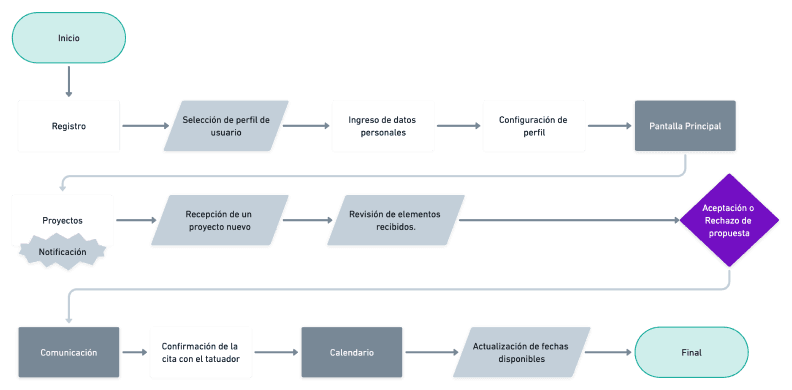
In this step we definey the scope of the product, creating an MVP of most relevant and needed features. This will then be passed to every other part of the group, or in this case created alognside with them.
MVP
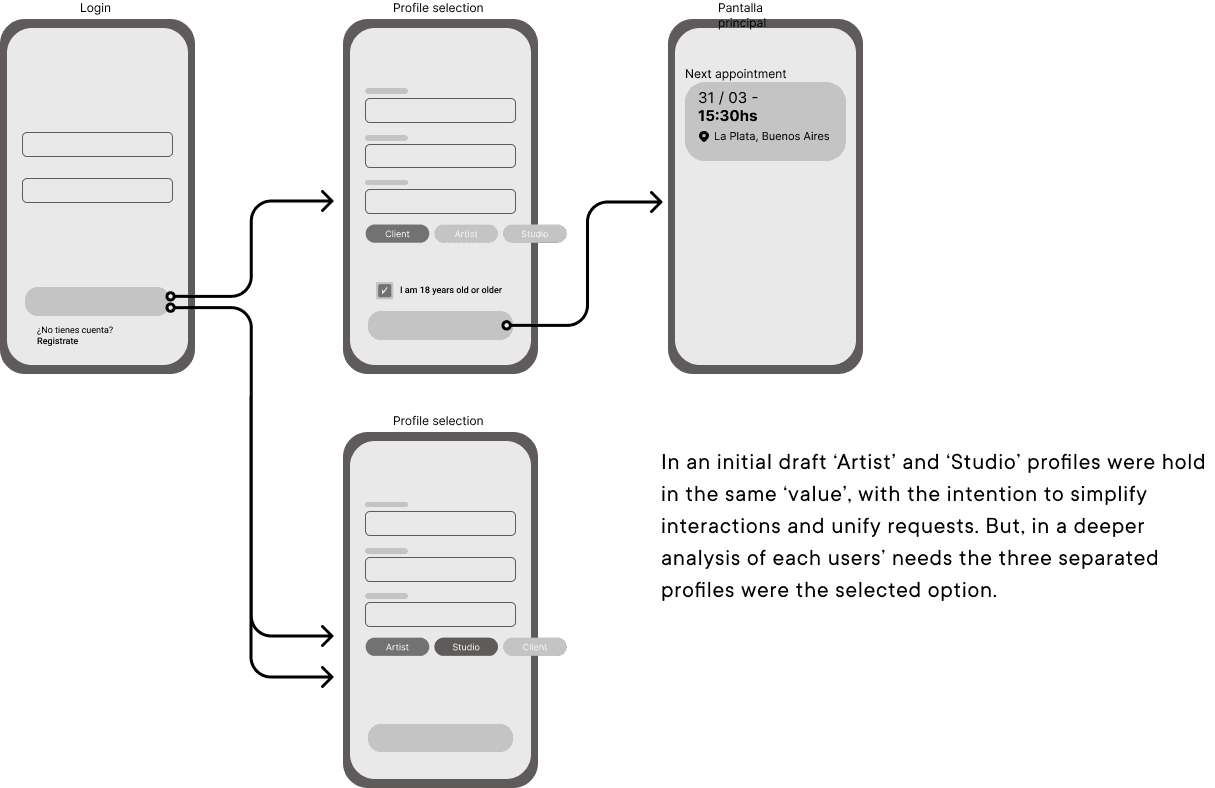
Dedicated profile highlighting the operations related with each user
Clients: Create a request with a tattoo artist by choosing an style, an existing project or an artist that they like.
Artists: Create a portfolio of projects, review -an accept or decline- request and asociate with studios.
Studios: Create a studio account with related artists, events and schedule.
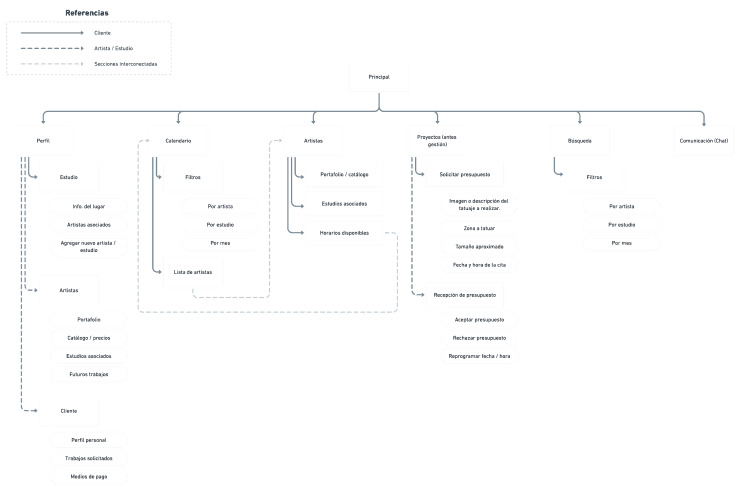
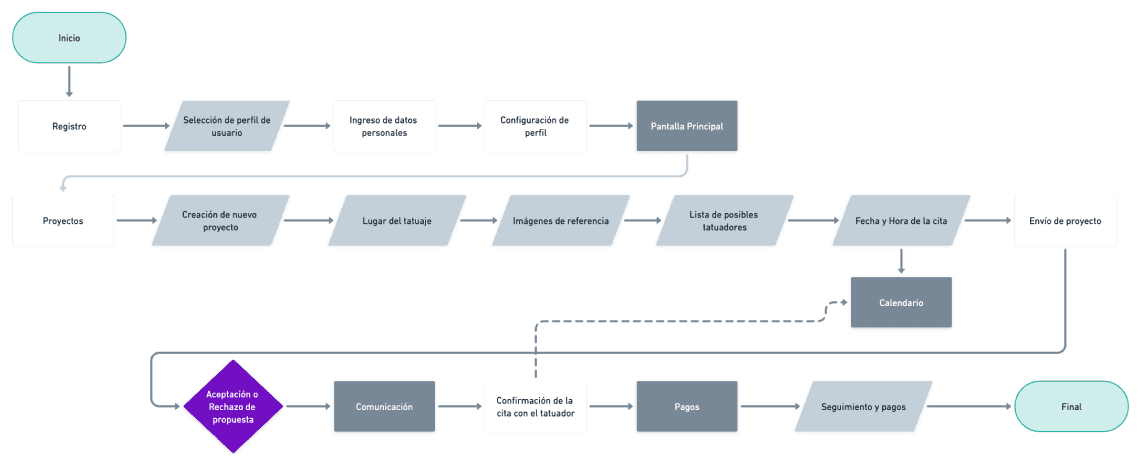
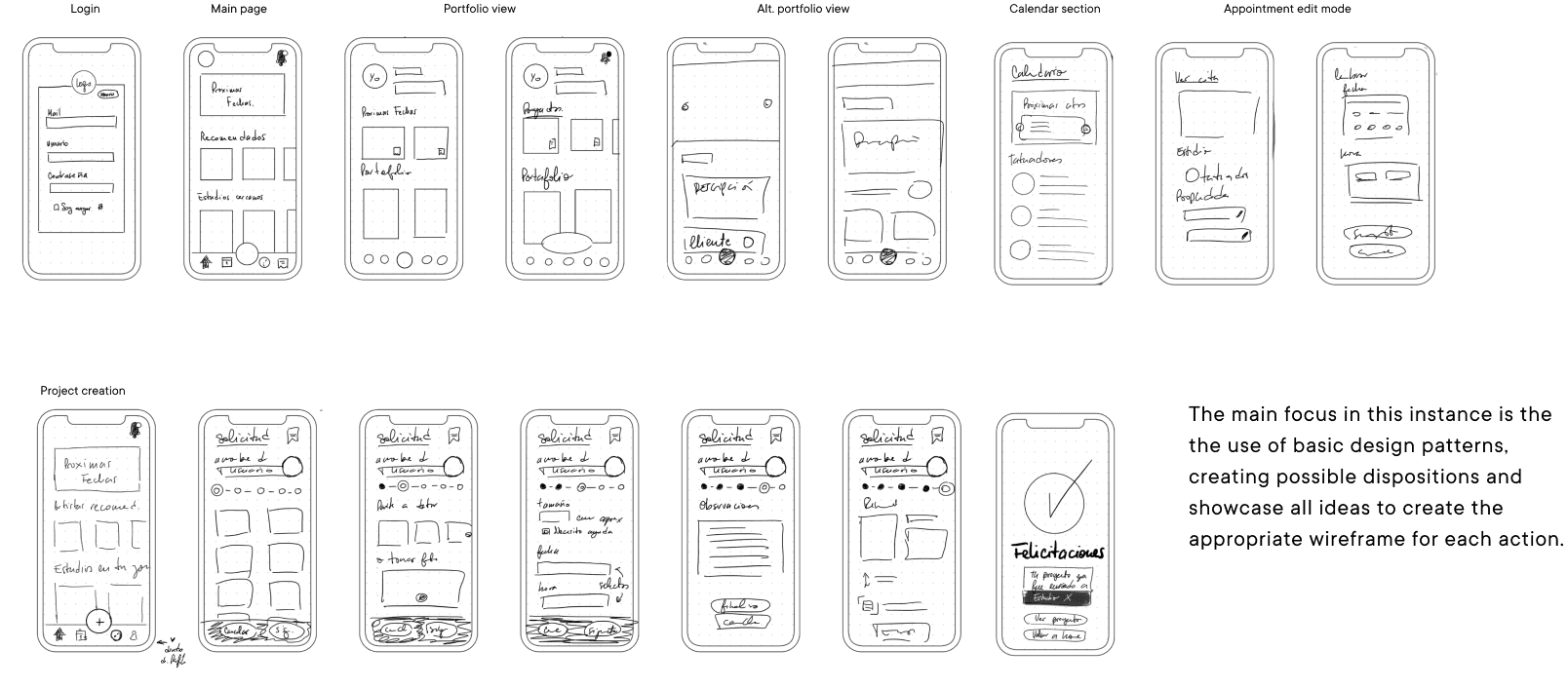
Step-by-step organization of tattoo requests, with multiple ways to approach the project.
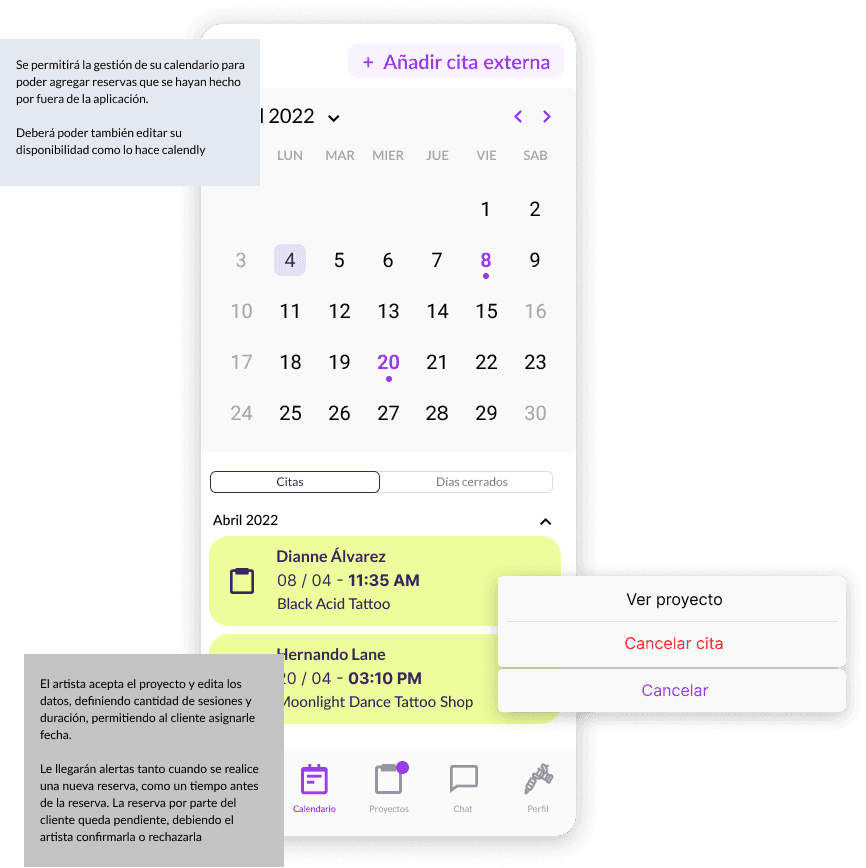
Shared calendar an schedule between clients and artists and between artists and studios to facilitate appointments.
Easy to access portfolio shared between artists and clients.
Geolocalization to find artists and studios globally
Create events and open projects to be picked by clients.
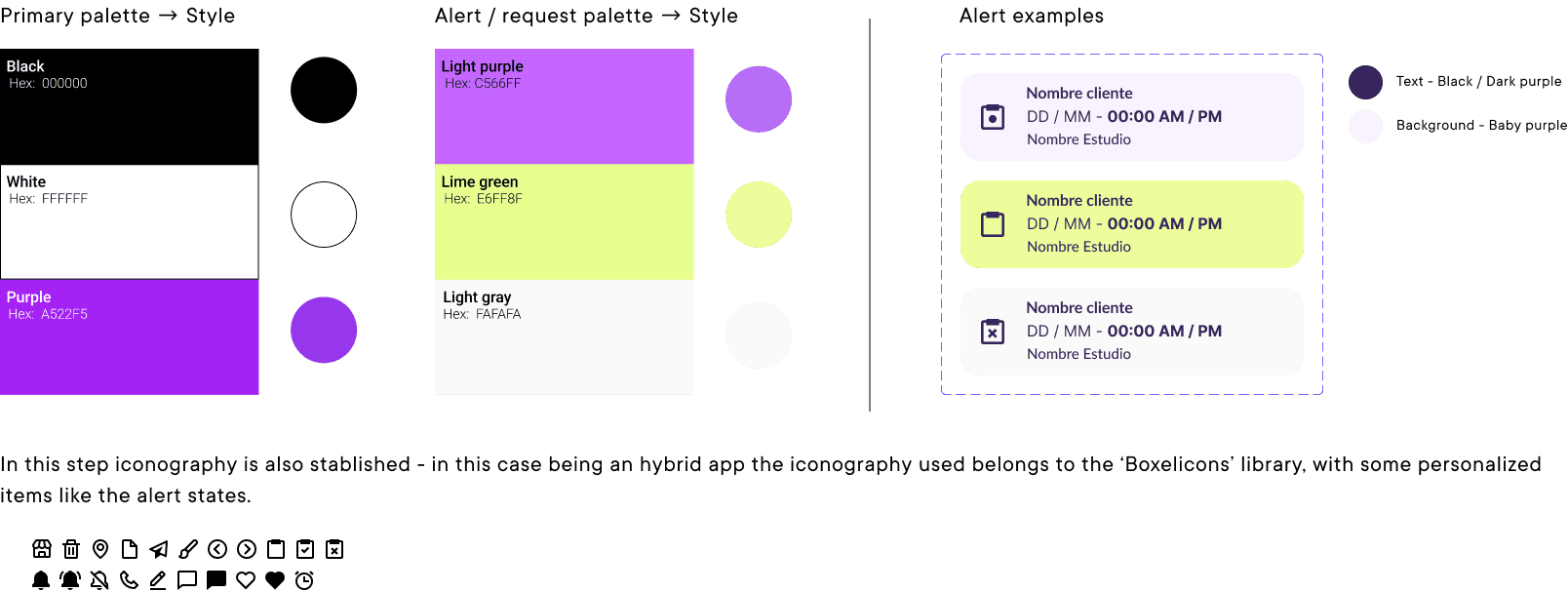
Hybrid mobile application: made for both Android (Material Design) and iOS (Human Interface) devices, creating an unique design system that considers both sets of design patterns.
Visibility and contrast: Being an application with a heavy focus in the user’s content in all of the posible profiles it’s fundamental to assure the visibility and findability of all elements and aspects no matter what the content is.
Legality and consent: Being a tattoo related application the user guidelines and legal regulations are some of the main aspects to keep in mind while creating an account.